The AiEdge Newsletter

The AiEdge Newsletter

Deep Dive: How Speculative Decoding Makes LLMs Faster

How a smaller model helps a larger model generate text faster without changing its output distribution.

Damien Benveniste's avatar
Damien Benveniste
Sep 09, 2026
∙ Paid

Speculative decoding can make a coding assistant respond faster by having a small model propose several future tokens for a larger model to check together. The larger model, called the target, still determines the output probabilities. The surprising part is that the small model can guess wrong without changing those probabilities.

In the two-model version we will follow, the target still does its full computation. The saving comes from arranging that computation differently, so one pass through its layers can advance the answer by several tokens. Whether that saves time depends on how much of the draft survives.
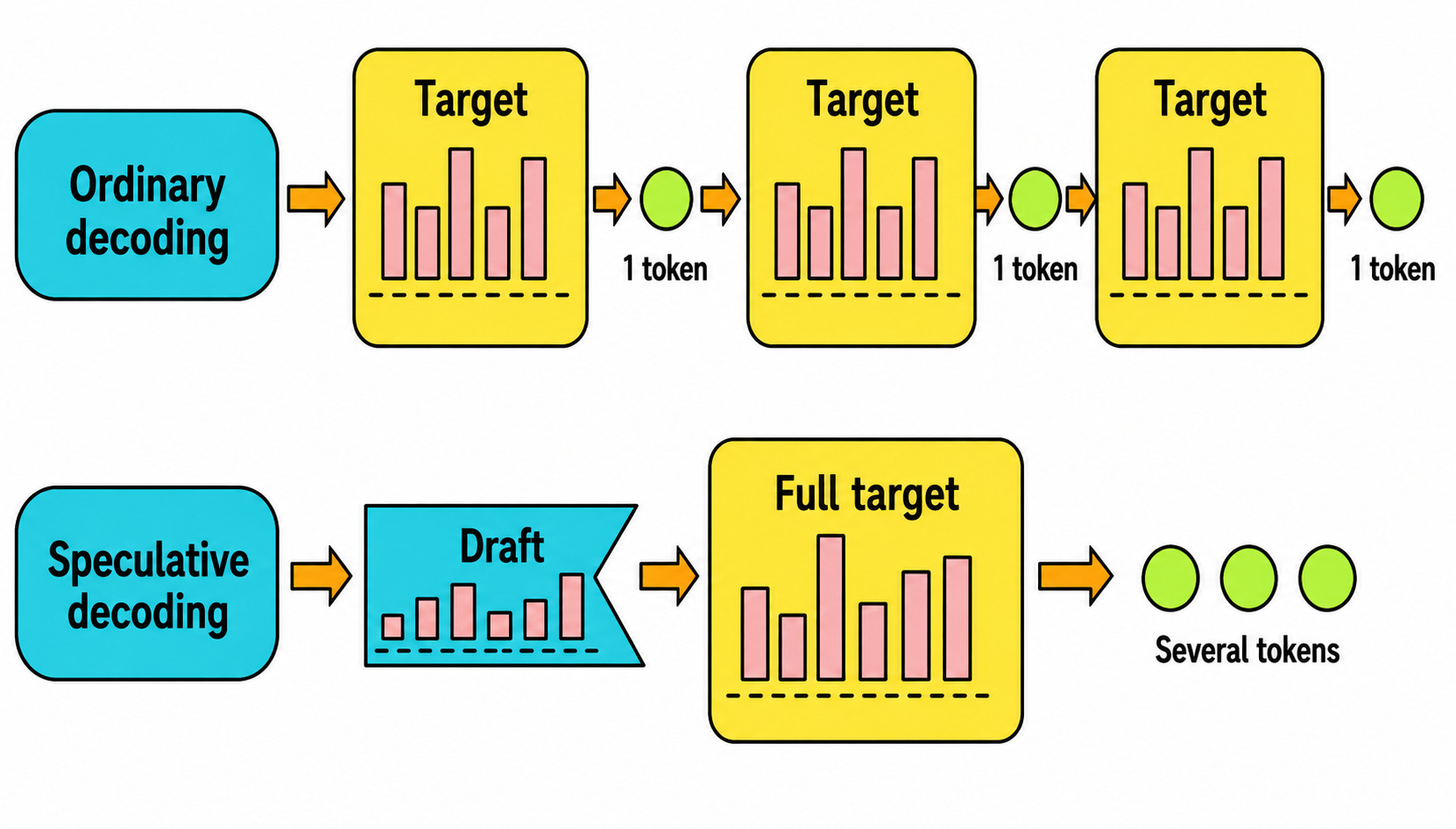
Two generation paths compare repeated target calls with one full target pass over draft tokens.
A draft makes several conditional predictions available for one full target pass.
User's avatar

Continue reading this post for free, courtesy of Damien Benveniste.

Or purchase a paid subscription.
© 2026 AiEdge · Privacy ∙ Terms ∙ Collection notice
Start your SubstackGet the app
Substack is the home for great culture