


An AI coding assistant can remember that you use Python for deployment scripts and still get the next deployment wrong after you switch to Go. The problem is not that it forgot everything. It may remember both instructions and have no reliable way to tell which one is current.
Persistent agent memory tools now let applications carry stored information across sessions and update it, making the quality of that update consequential for later tasks. The question is: when a user changes a standing preference, what must happen so an agent acts on the new one? A useful memory system treats the new message as a proposed change to stored state. It identifies the fact, finds the existing fact about the same thing, reconciles the two, commits the active version, and retrieves that version when the next task needs it.
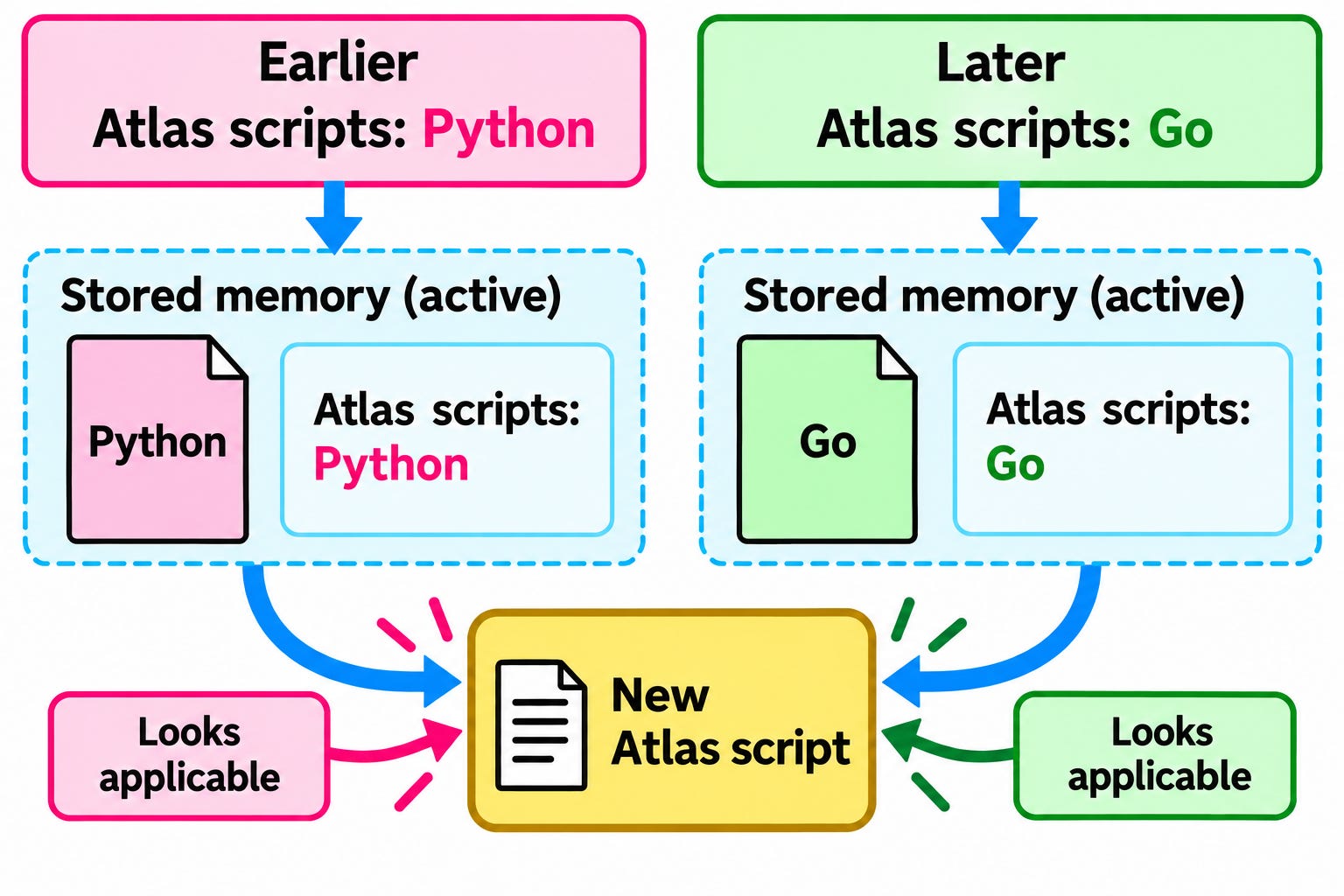
That differs from appending messages to a transcript. We can see why by following one preference from its first instruction through a correction and a later task. The same failure can affect a project decision or customer preference.
What changes when an agent has memory?
The model receives a limited working context with each request. A conversation transcript can be placed in that context, but it grows, contains incidental remarks, and may contain claims that no longer hold. Persistent memory here means an external store that keeps selected information beyond one request or session. A write operation changes that store; a later read returns a useful part of it to the model. The model's weights are not being retrained every time a preference changes.
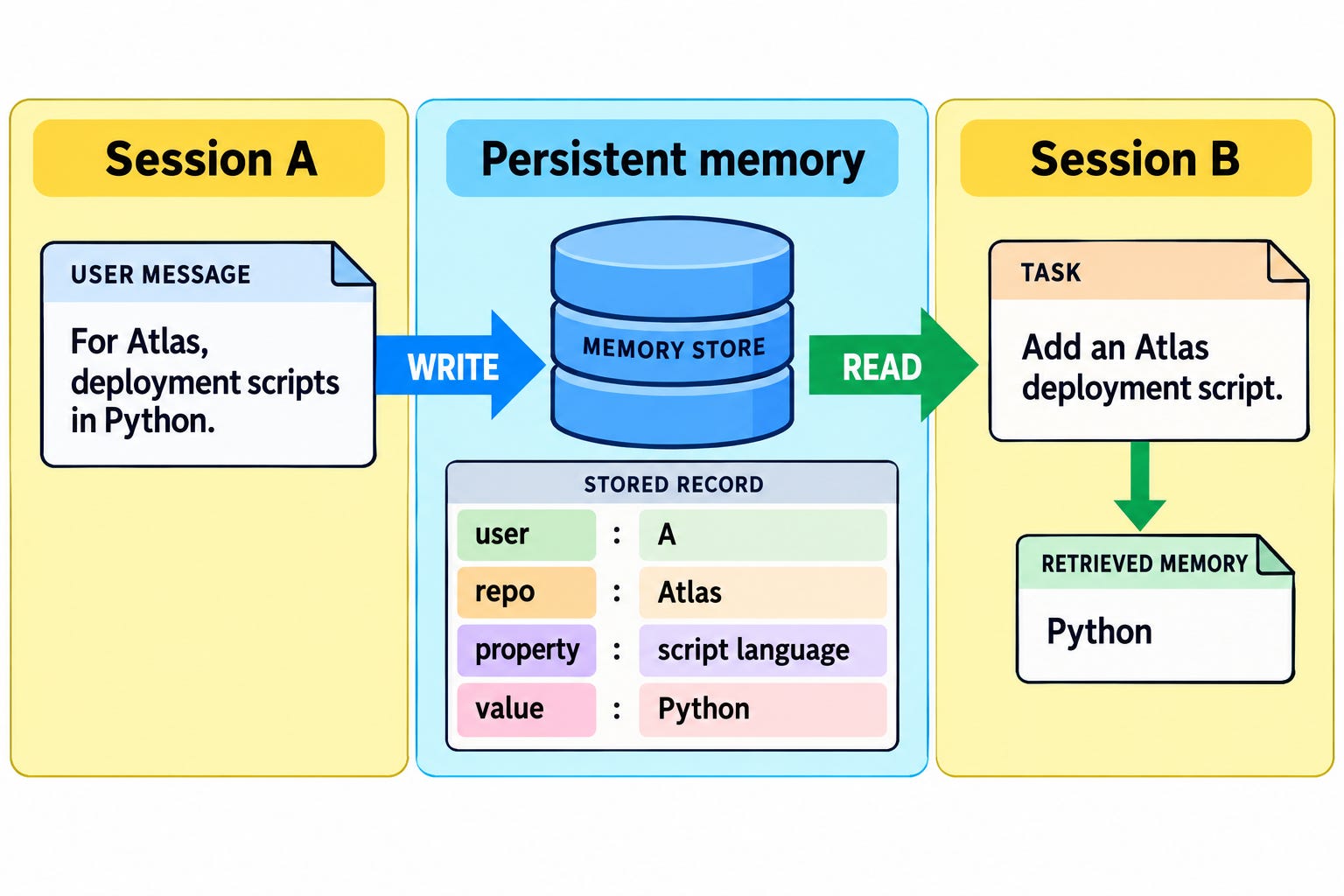
Suppose a user tells a coding assistant, “For the Atlas repository, write deployment scripts in Python.” The assistant might store a compact record with four parts: the user, the Atlas repository, the subject deployment-script language, and the current value Python. The message that supplied the preference is its source. This is more useful than an unqualified memory such as “prefers Python,” because the latter could affect unrelated work.
The store has two distinct paths. On the write path, a message or tool result is examined for information worth retaining, then compared with what is already stored. On the read path, the next task retrieves applicable memory and places it where the model can use it. If the write path is wrong, fast retrieval brings back a mistake. If the read path misses the right record, a perfect update sits unused.
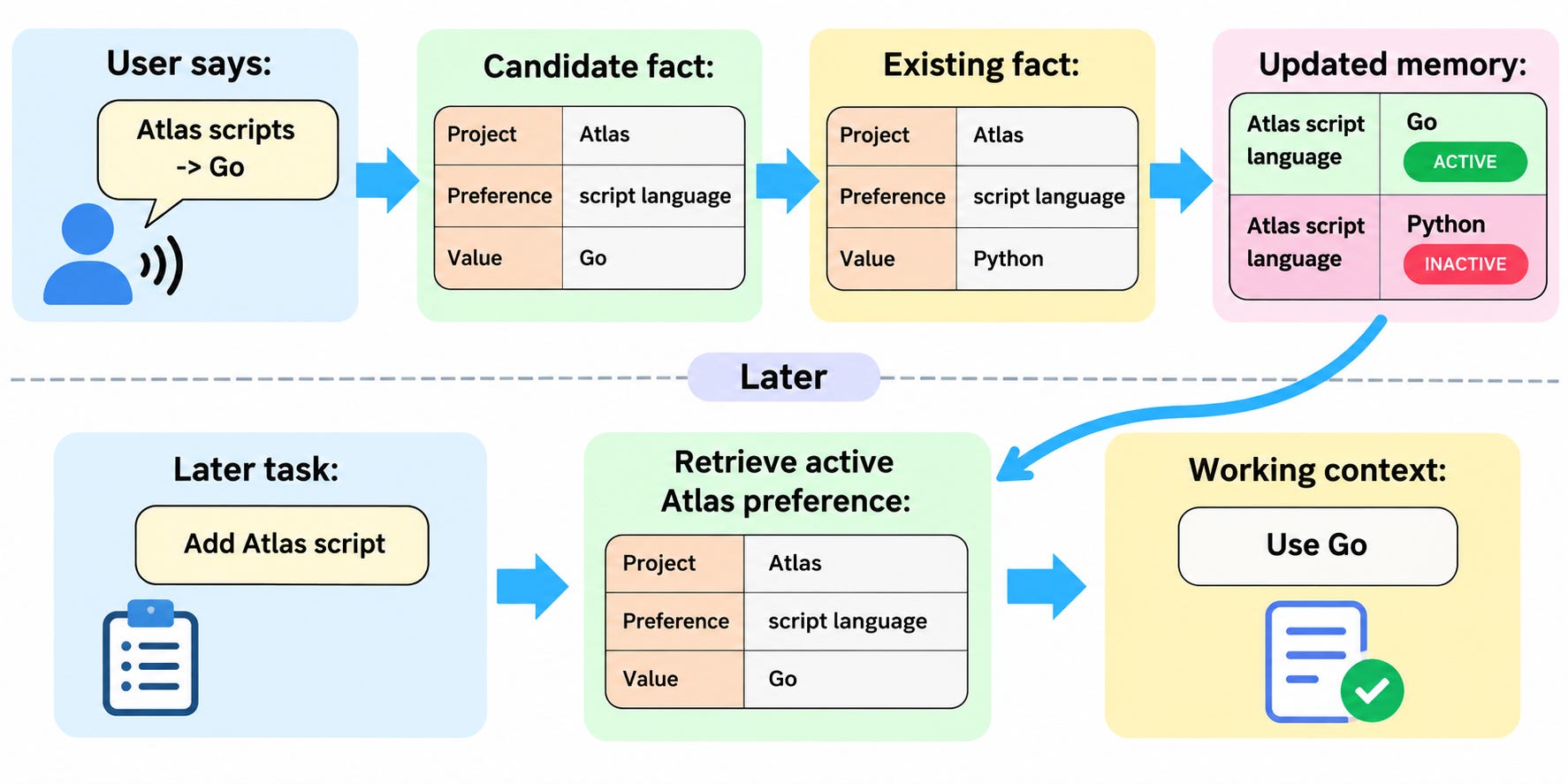
Now the user says, “For Atlas, use Go for deployment scripts from now on.” Adding that sentence as a second, equally active memory would leave the future assistant to arbitrate a contradiction each time. A better result is an active Atlas deployment-language preference of Go, with the former Python preference no longer active. The old statement may remain in an audit history, but it should not be presented as another current instruction.
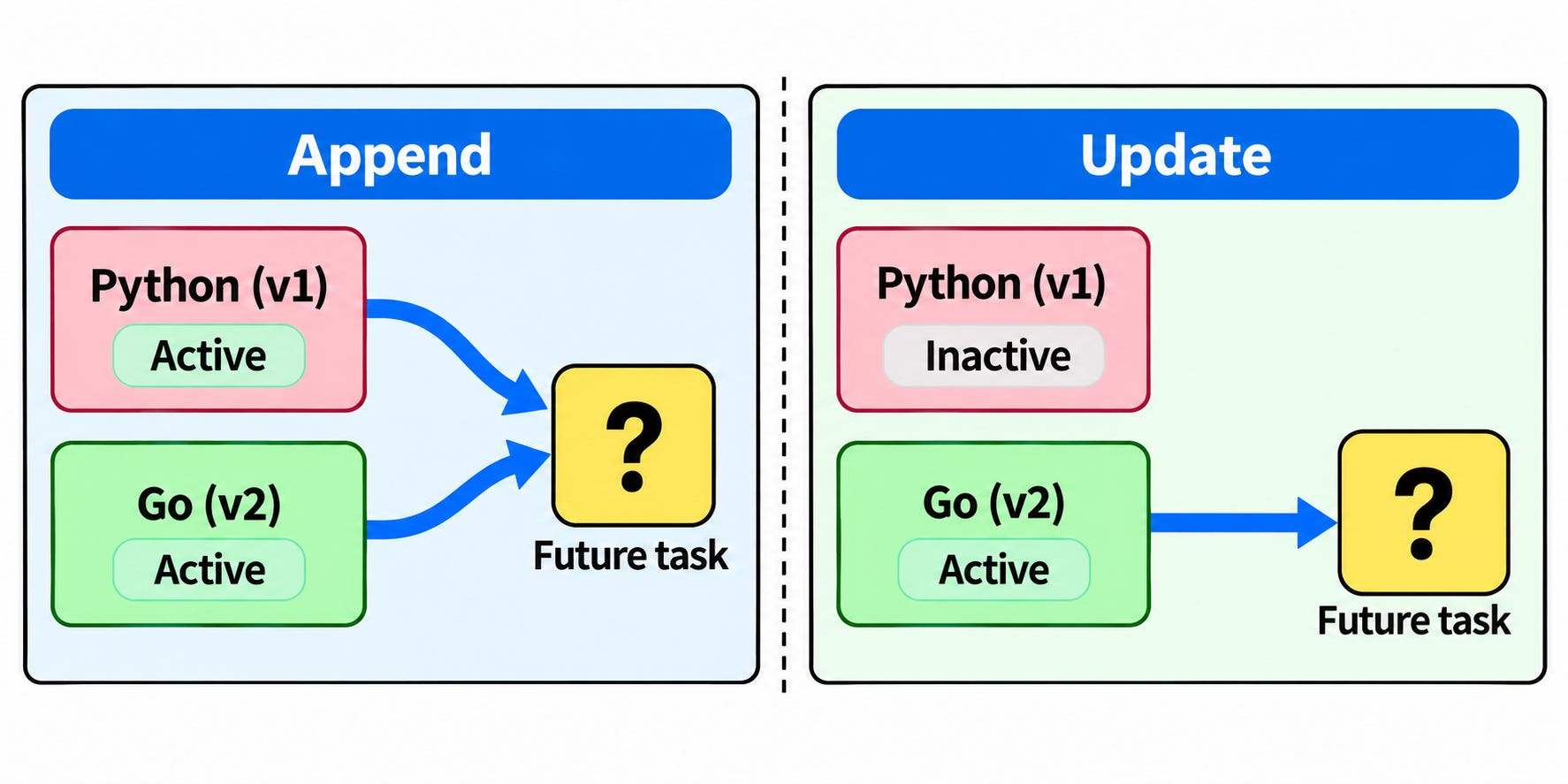
Remembering a correction means changing the state that future reads see, not merely remembering that a correction was said. The change has to preserve the subject and scope of the fact, or it will solve one task by creating a wider error.
